Construction Needs Nature

CONNA

mehr erfahren

Construction Needs Nature

CONNA

mehr erfahren

Project Goals

Generated with AI
The Conflict Points of Nature Conservation, Land Consumption and Resource Scarcity are the Focus of the Research Group.

The questions developed in this regard are the development of implementation practices to establish nature conservation on construction sites, as well as the topic of environmental awareness via the terms strong sustainability, renewable raw materials, resource conservation and environmental protection in practical application algorithms for the planning and execution of buildings. The resulting solutions are disseminated in a strictly networked manner at the European level. The resulting goal is the creation of a center of expertise for natural building and thus also its training.

The result is a new research center for the development and execution of innovative construction-oriented research projects.

CoNNa (Construction Needs Nature) stands for innovative future research, as well as for sustainable teaching with a high integration of environmental compatibility in construction.

Project Idea and Focus

Based on the basic idea of considering our surrounding natural and landscape space as worthy of preservation, the research group focuses on the concept of nature conservation as a research subject in the construction industry. This concept is very comprehensive, which is why the focus is on the conflict points of nature conservation, land consumption and resource scarcity in the context of the development of a research topic.

The resulting priorities can be summarized as follows:

  • Nature conservation in construction (ecology)
  • The optimization of supporting structures (structural engineering)
  • The development of performance-oriented parameters for life cycle assessment (sustainability)

Ongoing Projects

–> Funded by the European Regional Development Fund and Interreg V-A Italy-Austria

Content: The Interreg project aims to improve biodiversity in urban areas. Since, on average, more than 70% of urban green spaces are private, it is important to promote measures that can be imitated by garden owners to improve biodiversity. The Cross-border Biodiversity Toolbox (BioBox) project aims to promote measures to improve biodiversity in urban and rural areas in the program region. The BioBox contains easy-to-implement and cost-effective measures to increase the diversity of pollinators, birds and bats, as well as proposals for low-threshold monitoring methods for private and public users. The feasibility of the BioBox is being tested at public pilot sites in Austria and Italy, and the effectiveness of the measures is being verified through specific monitoring methods. A public awareness campaign for the public, businesses and municipalities will explain the importance of biodiversity and promote the use of the BioBox. Overall, the project makes an important contribution to understanding and protecting biodiversity in the program region.

For more information, please contact the project manager directly, Christina Paril.

–> Funded by the European Regional Development Fund and Interreg V-A Italy-Austria

Content: The Interreg project aims to improve biodiversity in urban areas. Since, on average, more than 70% of urban green spaces are private, it is important to promote measures that can be imitated by garden owners to improve biodiversity. The Cross-border Biodiversity Toolbox (BioBox) project aims to promote measures to improve biodiversity in urban and rural areas in the program region. The BioBox contains easy-to-implement and cost-effective measures to increase the diversity of pollinators, birds and bats, as well as proposals for low-threshold monitoring methods for private and public users. The feasibility of the BioBox is being tested at public pilot sites in Austria and Italy, and the effectiveness of the measures is being verified through specific monitoring methods. A public awareness campaign for the public, businesses and municipalities will explain the importance of biodiversity and promote the use of the BioBox. Overall, the project makes an important contribution to understanding and protecting biodiversity in the program region.

For more information, please contact the project manager directly, Christina Paril.

–> Funded by the European Regional Development Fund and Interreg V-A Italy-Austria

Content: The Interreg Project Craft2Biodiversity examines the interfaces between crafts, biodiversity and sustainable development. The aim is to identify practical approaches that support craft businesses in actively contributing to the conservation and promotion of biological diversity. To this end, craft knowledge, technical know-how and nature conservation expertise are bundled. The focus is particularly on the connections between biodiversity and energy efficiency, infrastructure, product improvement, new business models and social sustainability in the crafts sector. The first step involves an inventory and trend analysis to examine current craft practices in terms of their impact on biodiversity. This is followed by creativity workshops with pilot companies to develop and implement concrete measures. Pilot companies then develop and test innovative measures to promote biodiversity in creativity workshops. The results of the project will be incorporated into practice-oriented training modules and a guide that will help craft businesses to anchor biodiversity as an integral part of their sustainable business practices.

For more information, click here, or contact the project manager directly, Almuth Schindler.

Completed Projects

–> Funded by the European Regional Development Fund and Interreg V-A Italy-Austria 2014-2020

Cleanstone aims to lead the stone industry into a new era in which its competitiveness is promoted and environmentally friendly processing processes are introduced. It is an interdisciplinary project to establish new production chains and create an environmentally conscious awareness. Five partner organizations – universities, research centers and associations – are working together with numerous local stone mining companies for this purpose.

Basis and procedure:

When processing rock material for use as high-quality raw materials for the construction industry, fine grains occur in the form of silt and clay-rich sands. These sands are a mass issue because disposal is often only possible as backfilling within the quarries, although there is already a high enthalpy potential due to the extraction and processing. The aim is to analyze the materiality, which is created by the production processes, in the overall context of the project partners and to determine the greatest commonalities of the material.

The disposal concepts from the involved quarries are collected and their transferability in the program area is checked. This should also be about the solutions that mineralogically interesting material is available to the entire program area. The background is the declaration as recyclable materials and not as waste, so that reuse and conversion is caused without major re-declaration as a building material or production good. This mainly creates fine-grained sands that can be returned to a usable production process.

For more information, click here.

–> Funded by the European Regional Development Fund and Interreg V-A Italy-Austria 2014-2020

Cleanstone aims to lead the stone industry into a new era in which its competitiveness is promoted and environmentally friendly processing processes are introduced. It is an interdisciplinary project to establish new production chains and create an environmentally conscious awareness. Five partner organizations – universities, research centers and associations – are working together with numerous local stone mining companies for this purpose.

Basis and procedure:

When processing rock material for use as high-quality raw materials for the construction industry, fine grains occur in the form of silt and clay-rich sands. These sands are a mass issue because disposal is often only possible as backfilling within the quarries, although there is already a high enthalpy potential due to the extraction and processing. The aim is to analyze the materiality, which is created by the production processes, in the overall context of the project partners and to determine the greatest commonalities of the material.

The disposal concepts from the involved quarries are collected and their transferability in the program area is checked. This should also be about the solutions that mineralogically interesting material is available to the entire program area. The background is the declaration as recyclable materials and not as waste, so that reuse and conversion is caused without major re-declaration as a building material or production good. This mainly creates fine-grained sands that can be returned to a usable production process.

For more information, click here.

The project FIRELab aims to develop an “extinguishing laboratory” in a consortium consisting of the Carinthia State Fire Brigade School (LFS), the Carinthia University of Applied Sciences (FHK), Messfeld GmbH and the small companies BHT Solutions and ZT-Büro Dipl.-Ing. Werner Schwab for an in-depth practical fire brigade training, which can be used both on site and remotely via an internet connection. A fire extinguishing robot from the company LUF is used to train the efficient use of the extinguishing attack. Parameters such as flow rate, jet scatter, or droplet size can be controlled remotely. The efficiency of the measures can be assessed by parameters such as water return flow, temperature or elapsed time. Such a training opportunity for fire brigade training is not yet known. The aim is therefore to initially offer the extinguishing laboratory in Austria for nationwide training, but also to build similar laboratories at other locations (throughout Austria, but also internationally) and thus market the “product extinguishing laboratory”.

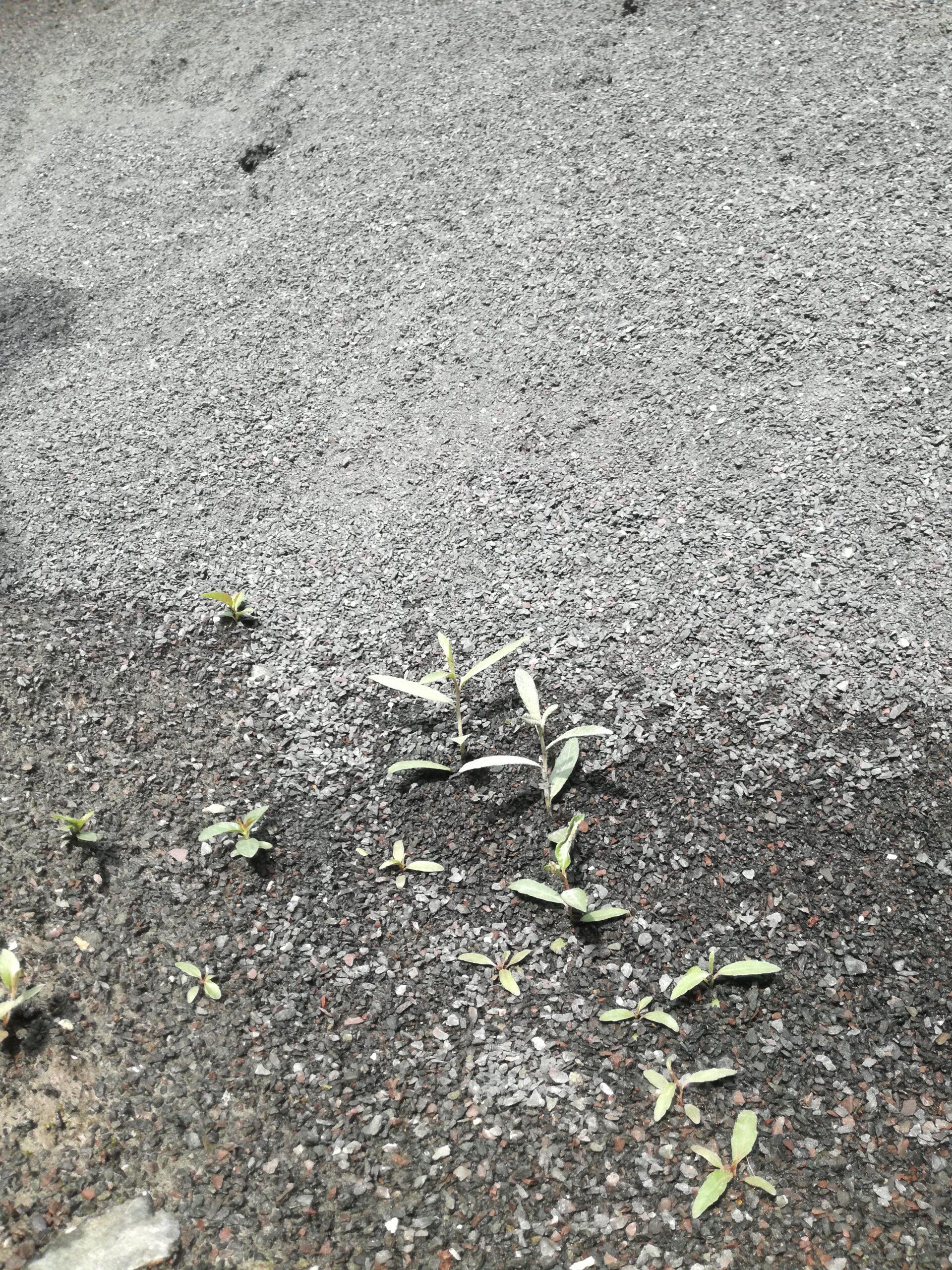
The project goal is the vegetation control on traffic infrastructure areas with a balanced balance between traditional and effective eco-alternative methods. The implementation includes the development of a software-based Decision Support Model with the following decision categories:

Part 1: Alternative “Life Control”
Part 2: Mechanical / thermal “control”
Part 3: Chemical “control”

Within the decision categories, ecological, chemical, mechanical and thermal alternatives to existing systems of vegetation control are developed and the existing ones are analyzed and evaluated.

Certificate Course Nature Conservation Specialist

Nature Conservation Specialist – an Innovative Training in the Field of Nature Conservation and Tree Management.
NSFK1

Since 2017, the Carinthia University of Applied Sciences, in cooperation with E.C.O. Institute for Ecology, has been offering the certificate course Nature Conservation Specialist. The one-year training provides an overall overview of relevant nature conservation practical methods in order to

  • to implement nature conservation projects of associations, initiatives and municipalities properly and
  • to successfully design nature and species conservation in the private and municipal sector.

The need for practically trained nature conservation specialists exists in the area of construction companies and in construction site management, in public administration, in specialist and planning offices, nature conservation administrations, organizations and institutions as well as in the area of municipalities (building yards).

The nature conservation specialist is in demand wherever technology and nature touch. The teaching content ranges from amphibian guidance systems and bird strike protection to nature conservation optimization of company premises and construction processes to the creation and design of hunting grounds, habitats and nesting opportunities. In the training, the participants learn to set the measures properly according to the state of the art and to document them systematically.

The nature conservation specialist is in demand wherever technology and nature touch. The teaching content ranges from amphibian guidance systems and bird strike protection to nature conservation optimization of company premises and construction processes to the creation and design of hunting grounds, habitats and nesting opportunities. In the training, the participants learn to set the measures properly according to the state of the art and to document them systematically.

The training includes an introductory part (nature conservation biology, nature conservation tasks, nature conservation law, nature conservation professions, etc.), equipment science and technology (photo traps, telemetry, drones, special hardware and software, etc.) as well as a nature conservation practical main part. Here, central competencies are taught and practiced “outdoor” on the object.

The certificate is designed as an additional qualification to an existing job profile. The certificate course has a duration of one year and is divided into 12 weekend blocks (Thursday to Saturday). The course is aimed at professionals and interested parties who want to expand their knowledge and skills in the field of nature conservation in construction.

Further information and contact details can be found here.

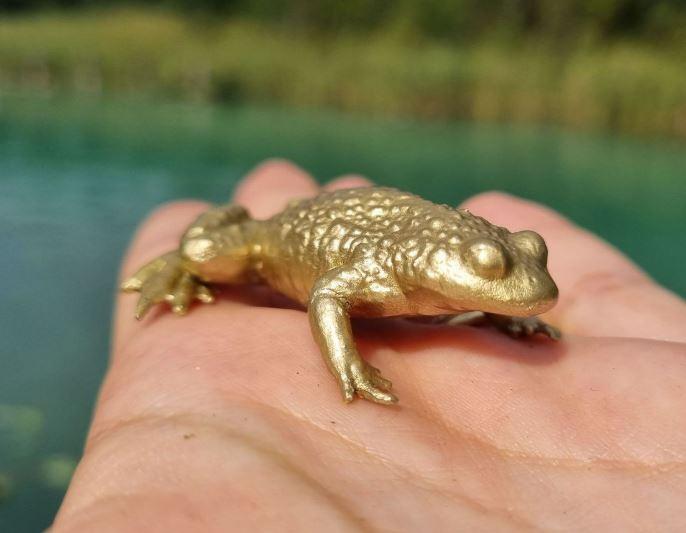
Award of the Golden Unke

What is the Golden Unke Award?

Identifying and highlighting innovation in nature conservation in construction and in the garden is the great goal of this award. The competition helps to recognize well-done implementations. The competition is intended to motivate companies and municipalities, but also private individuals and cities, to implement nature-friendly and near-natural projects and to bring them to the fore.

Course of the competition and deadlines

(Construction) projects are sought that are successful and innovative with regard to the implementation of nature conservation measures or nature conservation requirements. As soon as the project enables an improvement for nature (animal and plant species, as well as habitats), it has a chance to be awarded. All projects that have been successfully implemented in the last five years are eligible for submission. The submission is made by a person who was involved in the corresponding project.

Are you interested and would you even like to submit your own project? Then please find all further information on submission, contact persons and also example projects from previous years here.

Activities

WHAT IS THE AWARD OF THE GOLDEN UNKE?

Identifying and highlighting innovations in nature conservation in construction is the great goal of this award. The competition will help to recognize well-done implementations in the industry. The competition is intended to motivate companies to implement projects in a more natural and environmentally friendly way and to bring successful projects to the fore.

For more information, click here.

WHAT IS THE AWARD OF THE GOLDEN UNKE?

Identifying and highlighting innovations in nature conservation in construction is the great goal of this award. The competition will help to recognize well-done implementations in the industry. The competition is intended to motivate companies to implement projects in a more natural and environmentally friendly way and to bring successful projects to the fore.

For more information, click here.

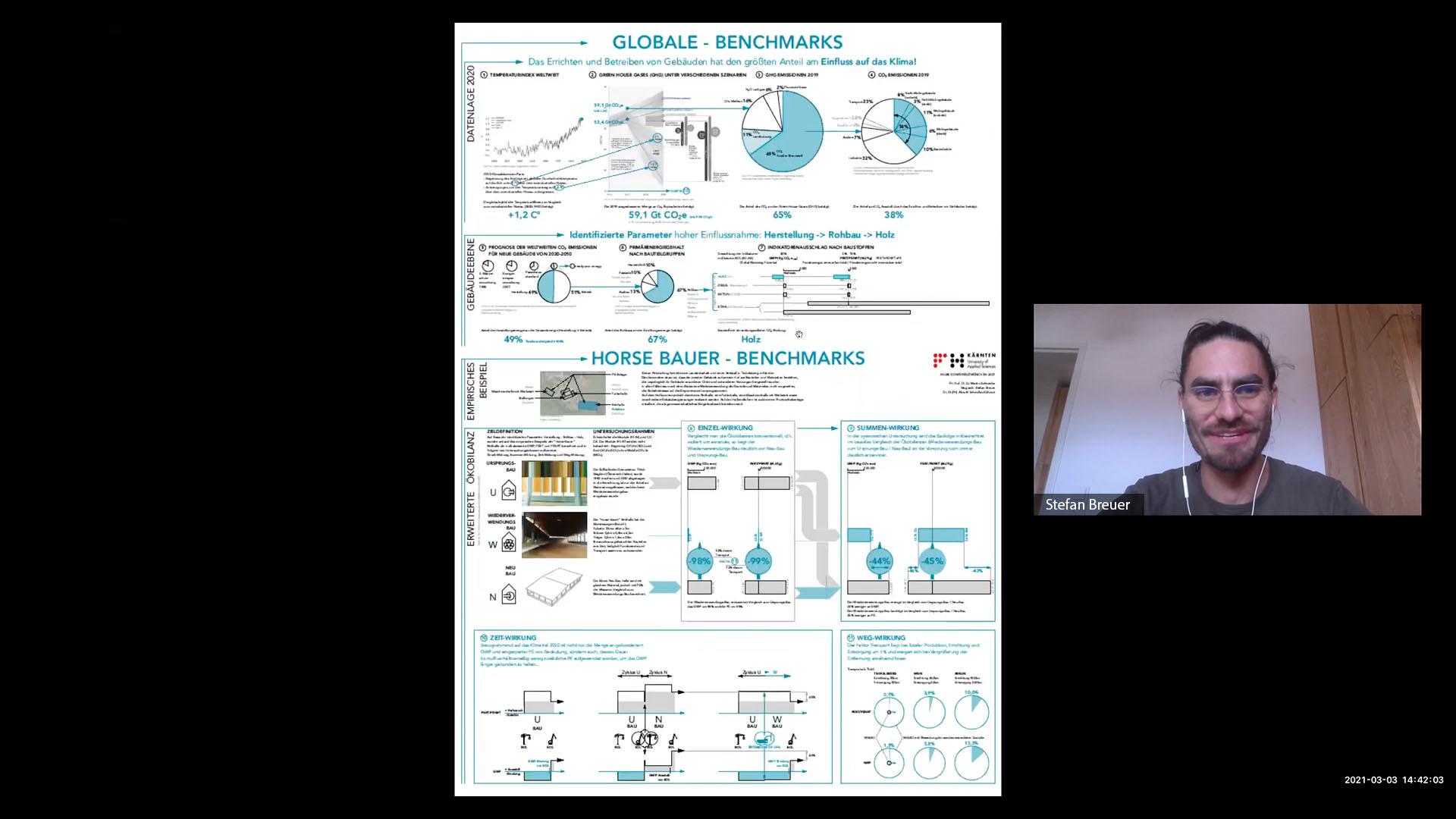
From March 03-05, 2021, the international conference of INUAS on the topic of resources took place in Munich. Due to Corona, this was carried out online. The CoNNa research group submitted the HorseBauer project, which was invited to participate in a peer review. In it, a riding hall built with used components was analyzed and compared with a conventional hall of the same use using LCA. The savings in energy and pollutant emissions were calculated, as well as the factors of time and path effect were investigated.

The Book of Abstracts with the contribution can be downloaded here: https://www.inuas.org/konferenz-2021/book-of-abstracts/
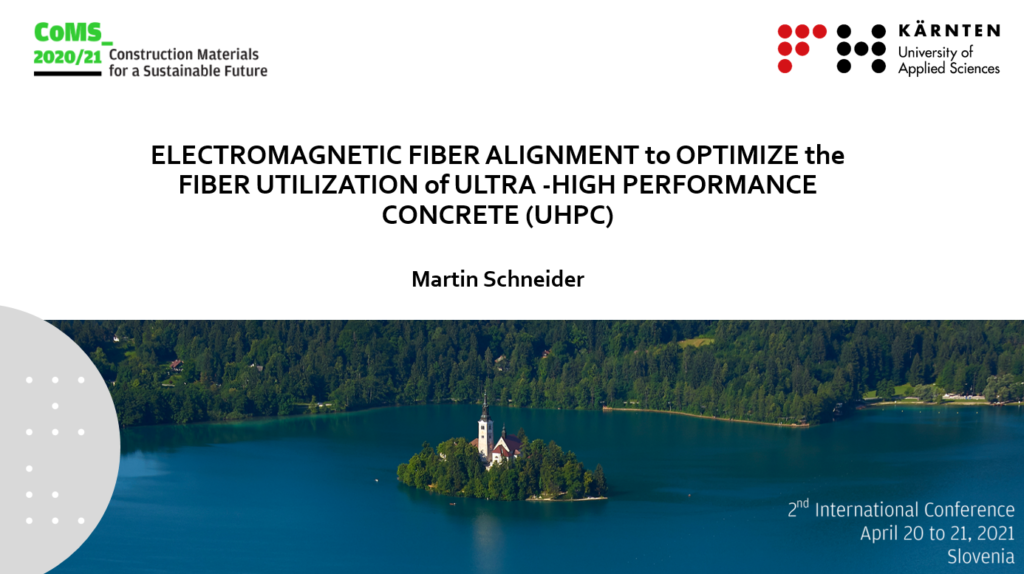
The BSC thesis “Electromagnetic Fiber Alignment for Optimizing the Fiber Utilization Rate of Ultra-High Performance Concrete”, developed by Manuel Megel in the CoNNa research group, was presented and published at the international conference “CoMS – Construction Materials for a Sustainable Future”. (https://coms.zag.si/)

The authors:

Schneider Martin, Ofner Sandra, Megel Manuel and Neff Carina

The thesis was carried out and supervised in close cooperation with Kaiserslautern University of Applied Sciences.

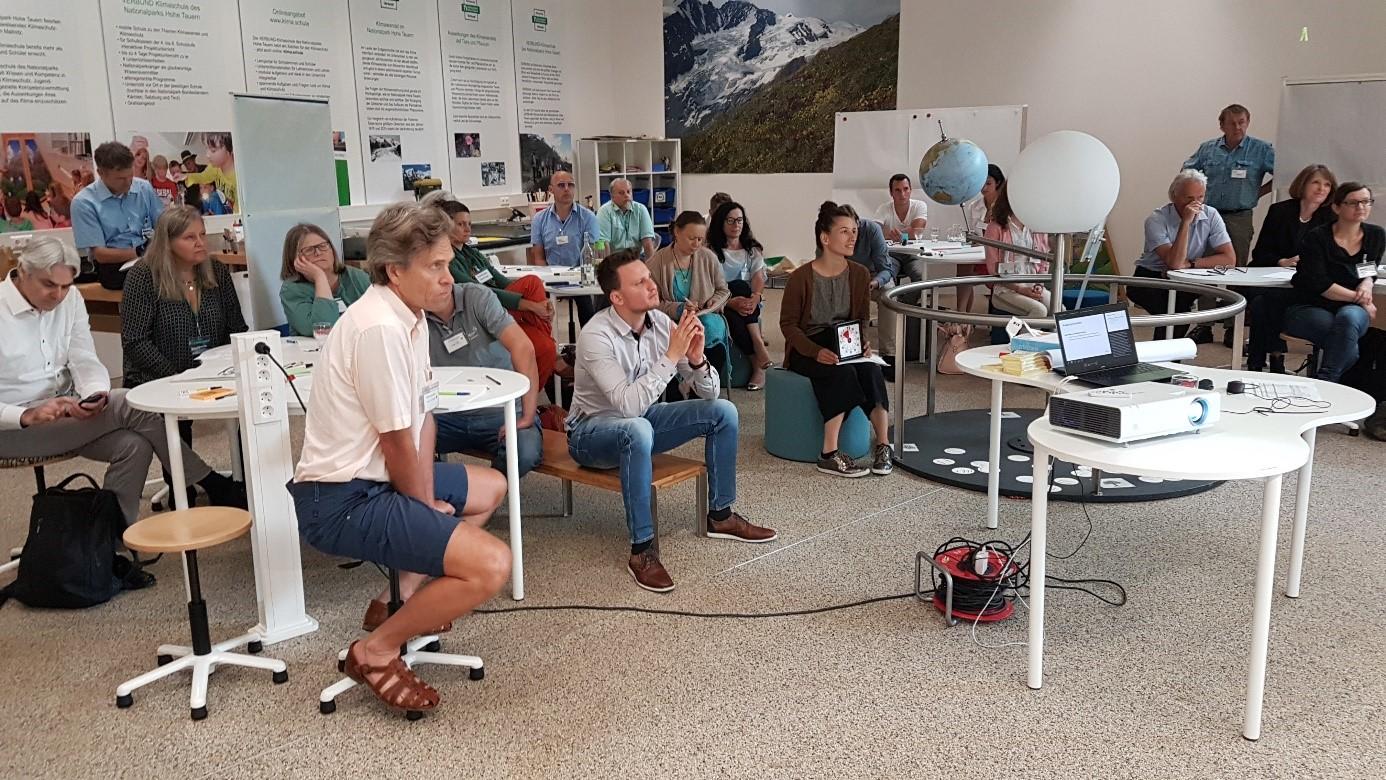
In the summer of 2019, the research group organized a future workshop as part of the Anthropocene Forum. The Anthropocene Forum is an international event where specialists give lectures on the topic of climate change. On one day of this forum, the research group held a future workshop on the topics of hydropower, mobility, and regional development. The 30 participants had one day to creatively find solutions for problems.
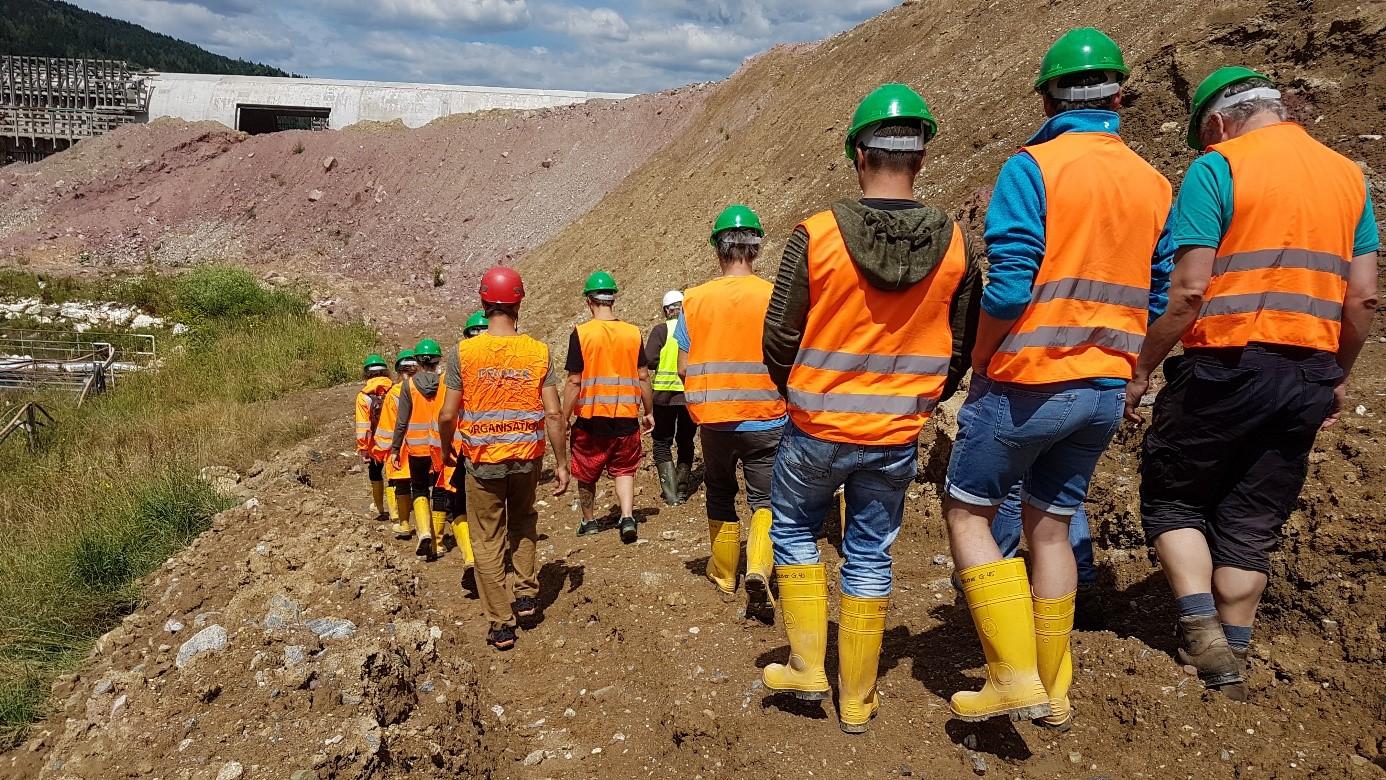
In October 2019, the Nature Conservation Specialist program started a new course. The students come from the fields of construction industry, ecology, biology, and administration. In this course, the students learn to independently prepare, practically implement, and review practical nature conservation measures in the construction and raw materials industry, in water management, in the management of transport routes (road, rail), and public infrastructures, as well as protected areas.
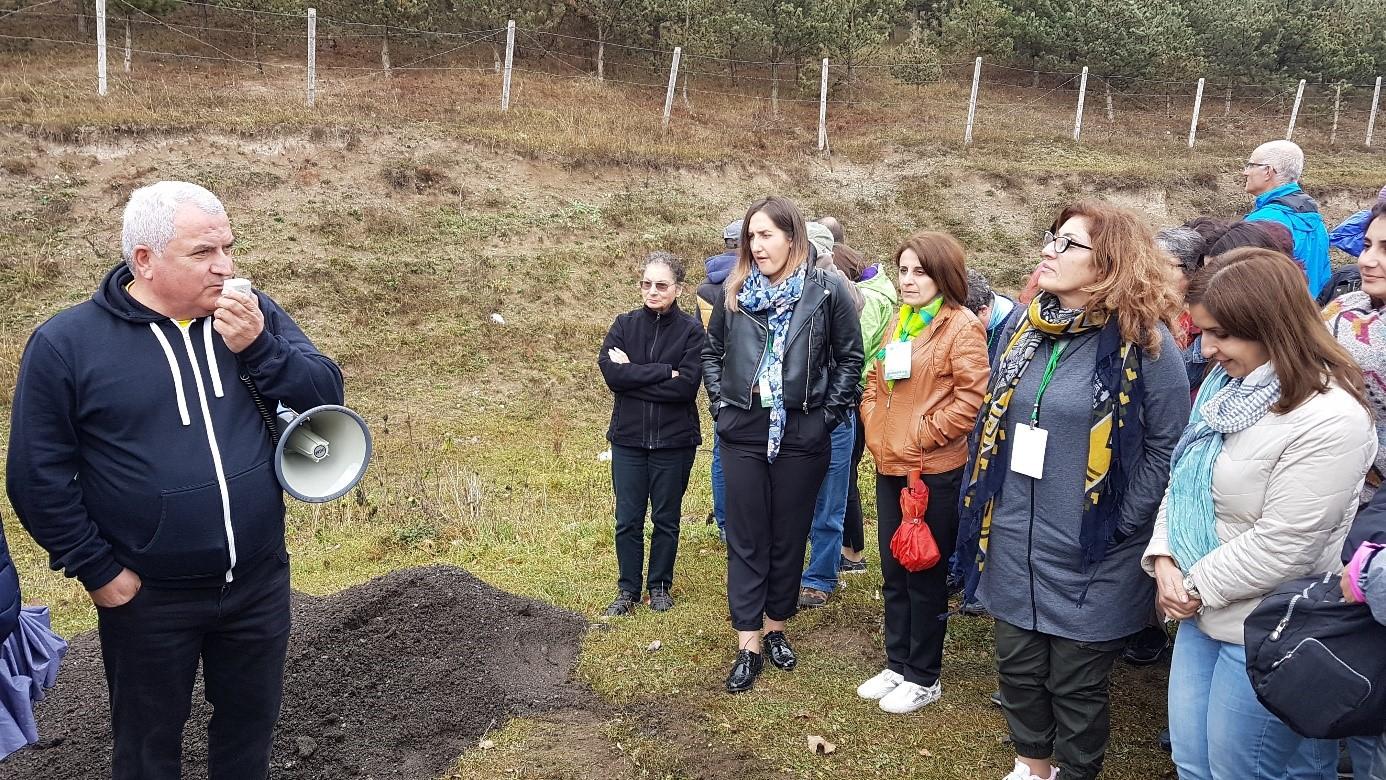
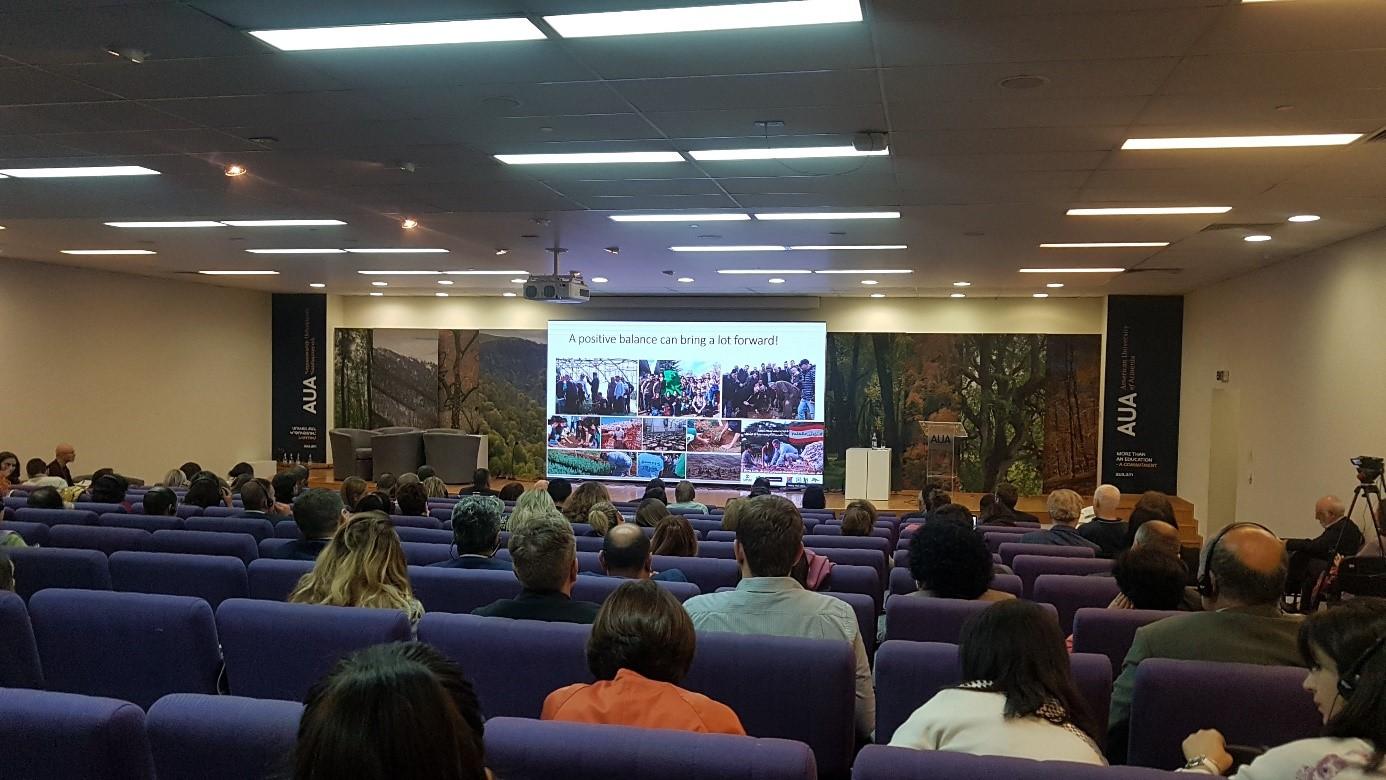
Two members of the research group participated in the Forest Summit by the AUA American University of Armenia in October 2019. The content of the summit was shaped by Armenia’s current forest issues. International experts had the opportunity at this summit to share their knowledge of forestry with Armenian stakeholders and to develop solutions.
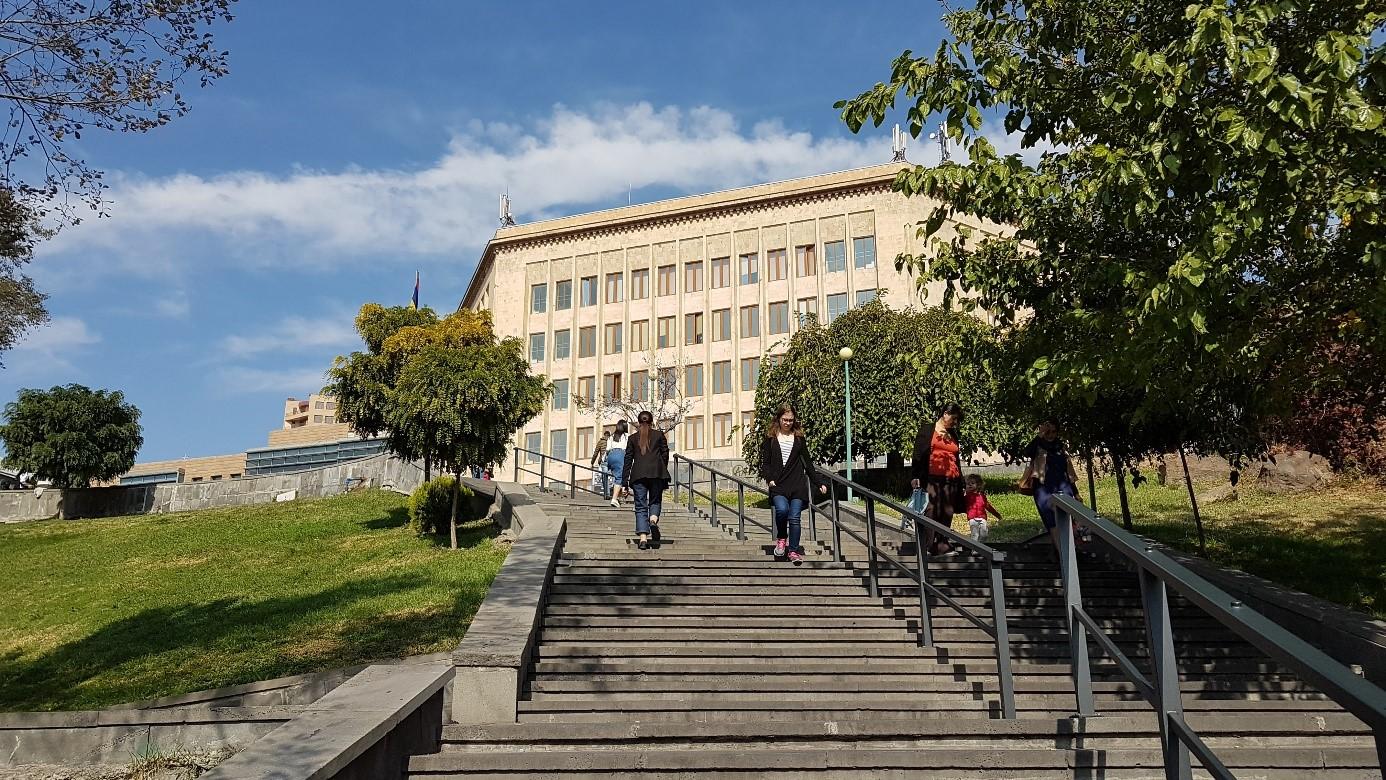
Two members of the research group participated in the Forest Summit by the AUA American University of Armenia in October 2019. The content of the summit was shaped by Armenia’s current forest issues. International experts had the opportunity at this summit to share their knowledge of forestry with Armenian stakeholders and to develop solutions.
The Team

Project Assistant

+43 (0)5 90500-5137
a.schindler-kuennert@fh-kaernten.at

Almuth Schindler-Künnert studied Civil Engineering – Building Construction and Architecture – Object Development at FH Kärnten. As a scientific project assistant, she is involved in various research projects in the Civil Engineering department. In the CoNNa research group, her thematic focus is on sustainability – the life-cycle-oriented quality optimization of products and processes.

Project Assistant

+43 (0)5 90500-5137
a.schindler-kuennert@fh-kaernten.at

Almuth Schindler-Künnert studied Civil Engineering – Building Construction and Architecture – Object Development at FH Kärnten. As a scientific project assistant, she is involved in various research projects in the Civil Engineering department. In the CoNNa research group, her thematic focus is on sustainability – the life-cycle-oriented quality optimization of products and processes.

“Sustainability is the conscious perception and shaping of the present, reflecting on the past with a view to the future. Every action should address the needs of present life without compromising the needs of future life – no matter when or where.”

Lecturer/ Senior Researcher

+43 (0)5 90500-5138
s.ofner@fh-kaernten.at

Sandra Ofner studied Civil Engineering at FH Kärnten, specializing in Design and Construction during her Master’s degree. As a scientific assistant in the KIB department, she is involved in various research projects, among other things, and also works in teaching, supervising student projects and theses. In the research group, she is responsible for civil engineering approaches and developments.

Lecturer/ Senior Researcher

+43 (0)5 90500-5138
s.ofner@fh-kaernten.at

Sandra Ofner studied Civil Engineering at FH Kärnten, specializing in Design and Construction during her Master’s degree. As a scientific assistant in the KIB department, she is involved in various research projects, among other things, and also works in teaching, supervising student projects and theses. In the research group, she is responsible for civil engineering approaches and developments.

“Sustainability in construction means building resource-efficiently and resource-savingly. It is particularly important to use materials where they make sense; i.e., to utilize the material-specific properties. In addition to saving materials, this leads to optimized structures and building materials.”

Head of Study Area and Degree Program, Course Director, Professor of Building Materials Technology, Head of Nature Conservation Specialist Program, Scientific Director

+43 (0)5 90500-5111
m.schneider@fh-kaernten.at

Martin Schneider studied Civil Engineering at Bauhaus University Weimar and completed his doctoral studies at Vienna University of Technology. At FH Kärnten, he holds the professorship for Building Materials Technology and also heads the department for building chemical analysis and the testing of building materials. In the CoNNa project, he is responsible as project leader for cross-thematic issues and coordinates the collaboration of the 3 main areas.

Head of Study Area and Degree Program, Course Director, Professor of Building Materials Technology, Head of Nature Conservation Specialist Program, Scientific Director

+43 (0)5 90500-5111
m.schneider@fh-kaernten.at

Martin Schneider studied Civil Engineering at Bauhaus University Weimar and completed his doctoral studies at Vienna University of Technology. At FH Kärnten, he holds the professorship for Building Materials Technology and also heads the department for building chemical analysis and the testing of building materials. In the CoNNa project, he is responsible as project leader for cross-thematic issues and coordinates the collaboration of the 3 main areas.

“The concept of sustainability implies a responsibility that everything we do will not lead to a disadvantage in the future. In construction, this means: finding the right location, defining the right use, seeking the right construction, selecting the right material, considering the right repurposing, choosing the right deconstruction, and leaving no pollutants behind.”

Stefan Foto

Lecturer/ Senior Researcher

+43 (0)5 90500-5139
s.breuer@fh-kaernten.at

Stefan Breuer studied Architecture at the Academy of Fine Arts Vienna. As a freelancer, he integratively researches, creates, and mediates architecture, building, and dialogue culture.

At FH Kärnten, he teaches in the Architecture degree program with a focus on Social and Rural Building as well as Design-Build.

In the CoNNa research group, he works on topics such as Life Cycle Assessment and Circular Building, as well as derived framework conditions for spatial production.

Lecturer/ Senior Researcher

+43 (0)5 90500-5139
s.breuer@fh-kaernten.at

Stefan Breuer studied Architecture at the Academy of Fine Arts Vienna. As a freelancer, he integratively researches, creates, and mediates architecture, building, and dialogue culture.

At FH Kärnten, he teaches in the Architecture degree program with a focus on Social and Rural Building as well as Design-Build.

In the CoNNa research group, he works on topics such as Life Cycle Assessment and Circular Building, as well as derived framework conditions for spatial production.

“Sustainable action satisfies our needs under social, ecological, and economic balance and the effectiveness of keeping our habitat regenerative.”

E.C.O. Institut fŸr …kologie
Lakeside B07b, 2. OG
9020 Klagenfurt
© Helge Bauer

Project Assistant
+43 (0)5 90500-5140
e.wiegele@fh-kaernten.at

Elisabeth Wiegele studied Geography and Regional Research at the Alpen-Adria-Universität with a focus on ecological topics.

At the Carinthia University of Applied Sciences, she completed the training to become a Nature Conservation Specialist. Her thematic focuses are ecology, nature conservation law, and nature conservation in construction.

Elisabeth Wiegele is responsible for the ecological aspects and approaches in the CoNNa research group.

Project Assistant
+43 (0)5 90500-5140
e.wiegele@fh-kaernten.at

Elisabeth Wiegele studied Geography and Regional Research at the Alpen-Adria-Universität with a focus on ecological topics.

At the Carinthia University of Applied Sciences, she completed the training to become a Nature Conservation Specialist. Her thematic focuses are ecology, nature conservation law, and nature conservation in construction.

Elisabeth Wiegele is responsible for the ecological aspects and approaches in the CoNNa research group.

“In the course of construction projects, applicants and stakeholders can seize the opportunity to create new and high-quality habitats, or to enhance existing habitats.”

Lorem ipsum dolor sit amet, consectetur adipiscing elit. Ut elit tellus, luctus nec ullamcorper mattis, pulvinar dapibus leo.

Scientific Assistant
+43(0)590500‐5129
a.hollerer@fh-kaernten.at

Anna Hollerer is currently pursuing her Master’s degree in Nature Conservation and Biodiversity Management at the University of Vienna. At the University of Natural Resources and Life Sciences, she completed her Bachelor’s degree in Environmental and Bioresource Management, as well as the Nature Conservation Specialist certificate course at FH Kärnten and the Green Care Forest Mediator certificate from BFW. Her areas of interest include renaturation, social ecology, and sustainability. As a scientific assistant in the building laboratory, she supervises and coordinates projects that bring together biodiversity and construction.

“To truly live and act sustainable means to be aware of the needs of every organism. This requires a holistic approach that takes into consideration non-human beings, the natural processes of our ecosphere and social systems.” 

Evan

Lecturer/ Senior Researcher

+43 (0)5 90500-5139
s.breuer@fh-kaernten.at

Stefan Breuer studied Architecture at the Academy of Fine Arts Vienna. As a freelancer, he integratively researches, creates, and mediates architecture, building, and dialogue culture.

At FH Kärnten, he teaches in the Architecture degree program with a focus on Social and Rural Building as well as Design-Build.

In the CoNNa research group, he works on topics such as Life Cycle Assessment and Circular Building, as well as derived framework conditions for spatial production.

Junior Researcher

+43 (0)5 90500-2136
e.vincent@fh-kaernten.at

Evan Vincent earned a Bachelor’s degree in Political Science from Portland State University in 2017. In 2023, he also completed his Master’s degree in Management of Protected Areas at Carinthia University of Applied Sciences. He is currently working on the Interreg projects Craft2Biodiversity and BioBox. As a former chef, he has a particular interest in reconciling small businesses with nature conservation.

“The concept ‘Construction Needs Nature’ means saying goodbye to ‘business as usual’. It offers professionals from the construction industry a new approach to how they can view their work and its impact on the world. The construction of buildings, roads, bridges, and other infrastructures is an essential part of a functioning society. However, integrating an ecological dimension into construction enables the creation of new jobs and the development of new skills. CoNNa also particularly promotes interdisciplinary collaboration between various sectors of society to plan for the future.”