
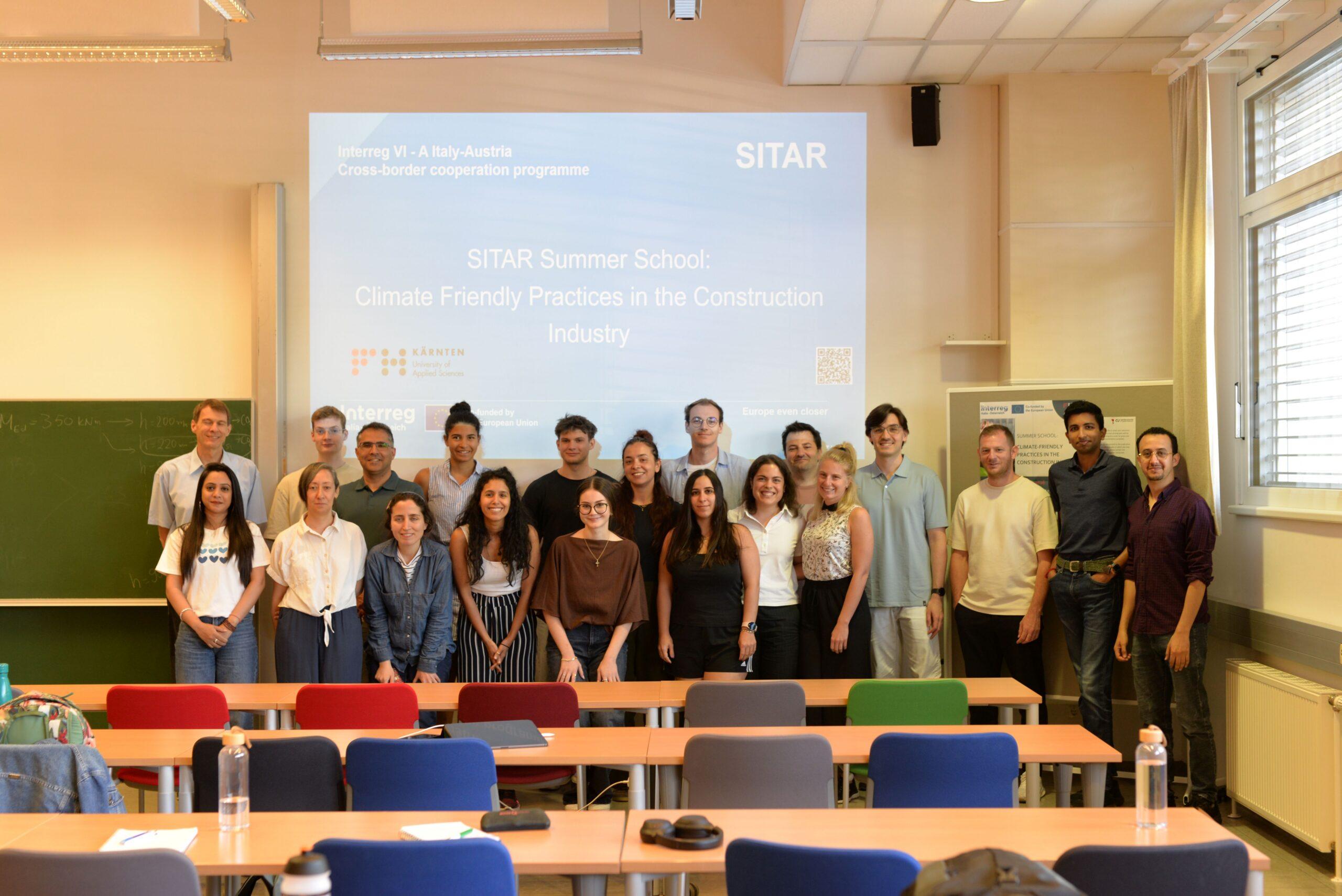
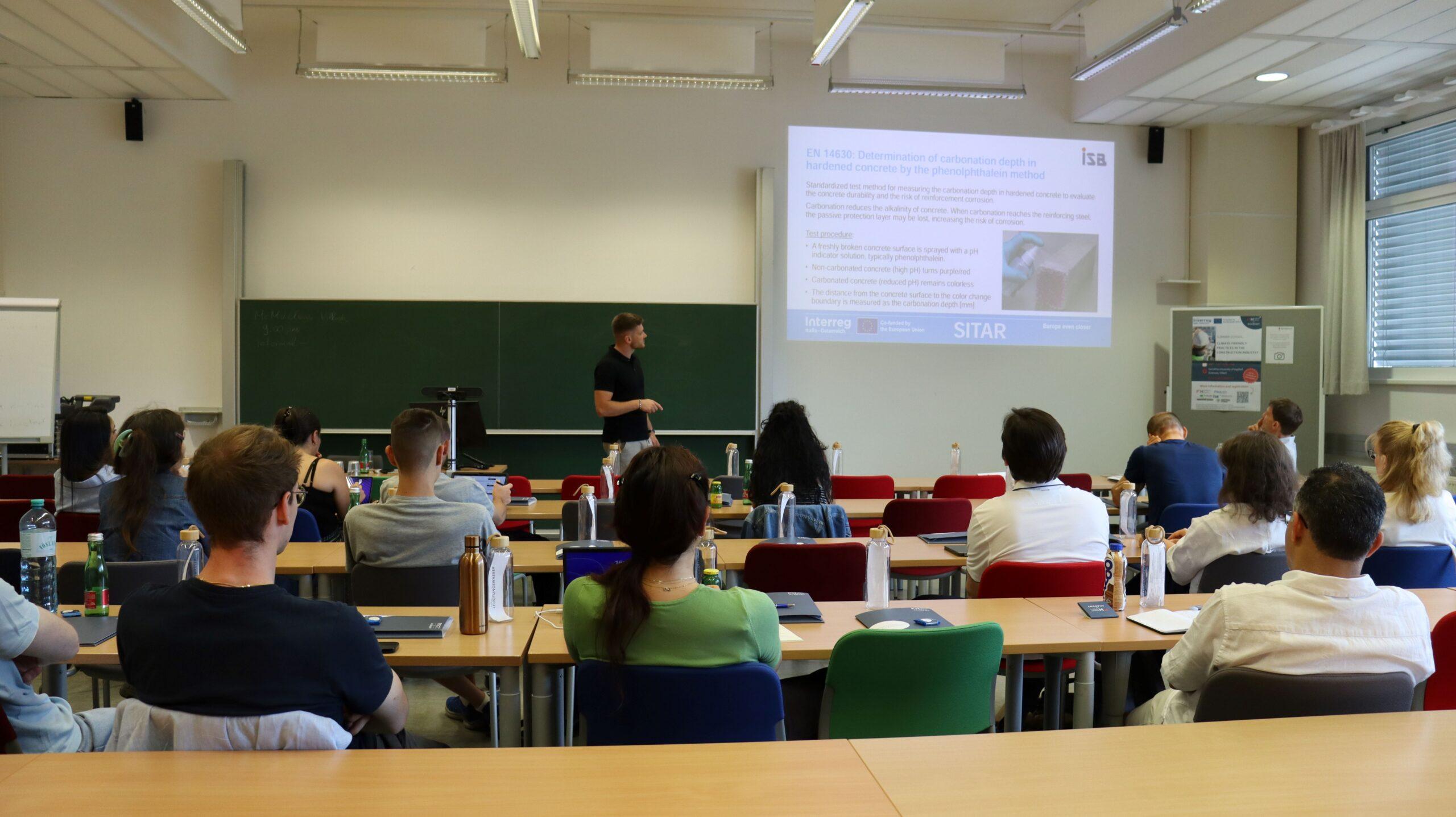
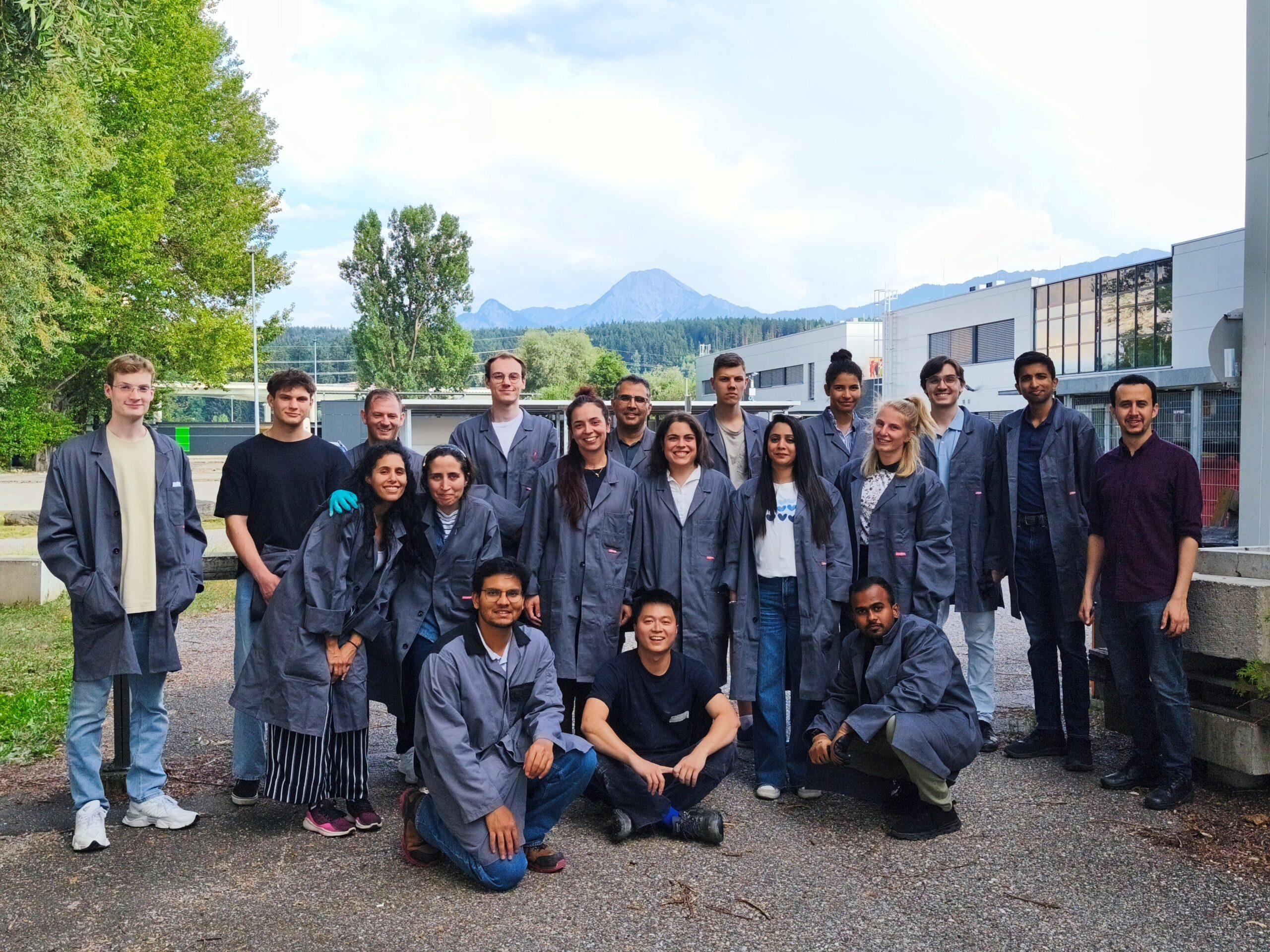
Villach, Austria, July 8–10, 2026 – The Interreg project SITAR successfully hosted its summer school on “Climate-Friendly Practices in the Construction Industry” on the campus of the Carinthian University of Applied Sciences (CUAS) in Villach. Over the course of three days, the event brought together more than 20 participants from Austria, Italy, and several other countries, creating a dynamic international learning environment focused on sustainability in the built environment.
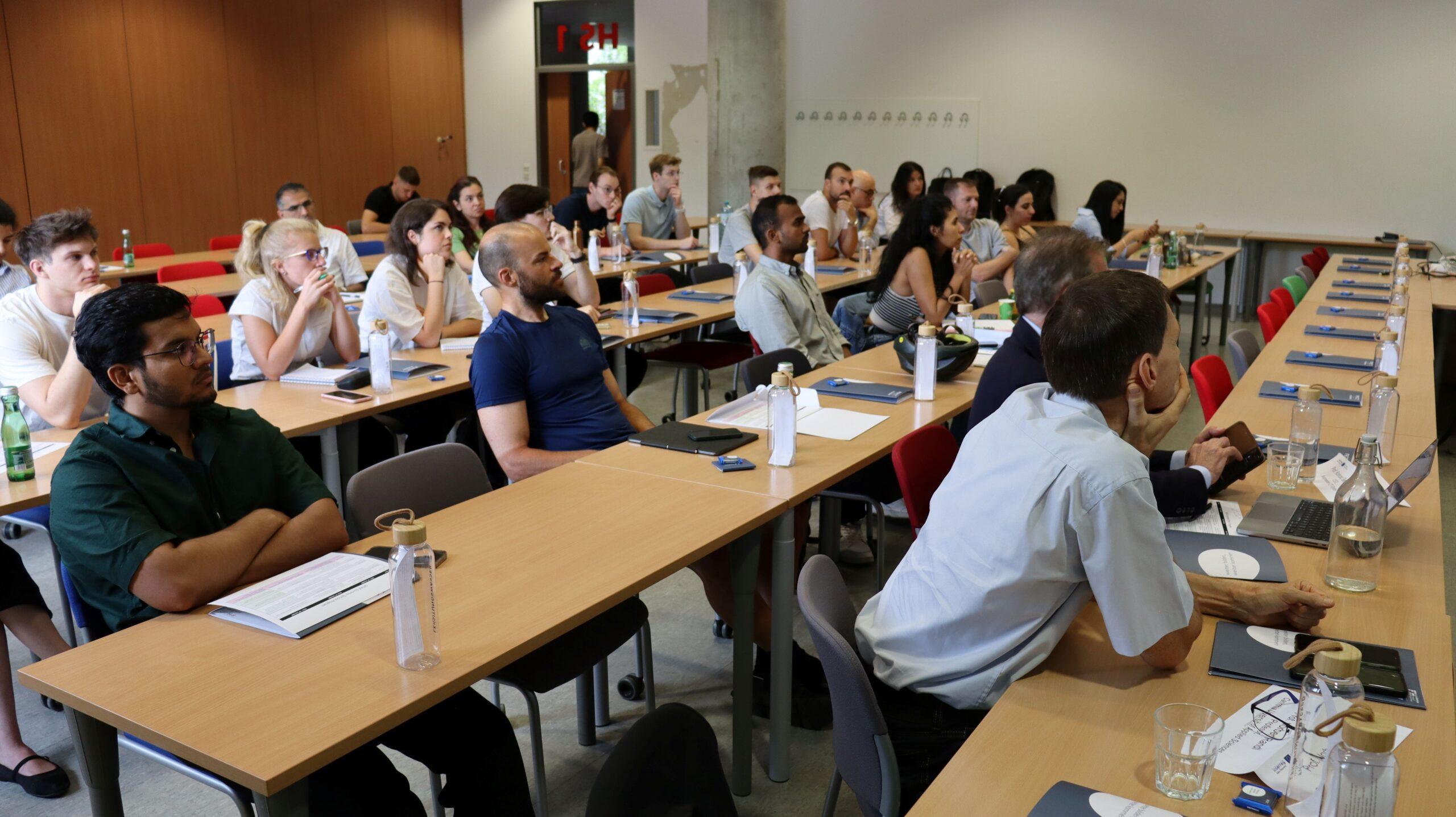
The summer school attracted a diverse group of participants, including master’s students, doctoral candidates, and postdoctoral researchers. This interdisciplinary and international mix fostered valuable discussions and the exchange of ideas, and strengthened collaboration between early-career researchers and experts working in the field of sustainable construction.
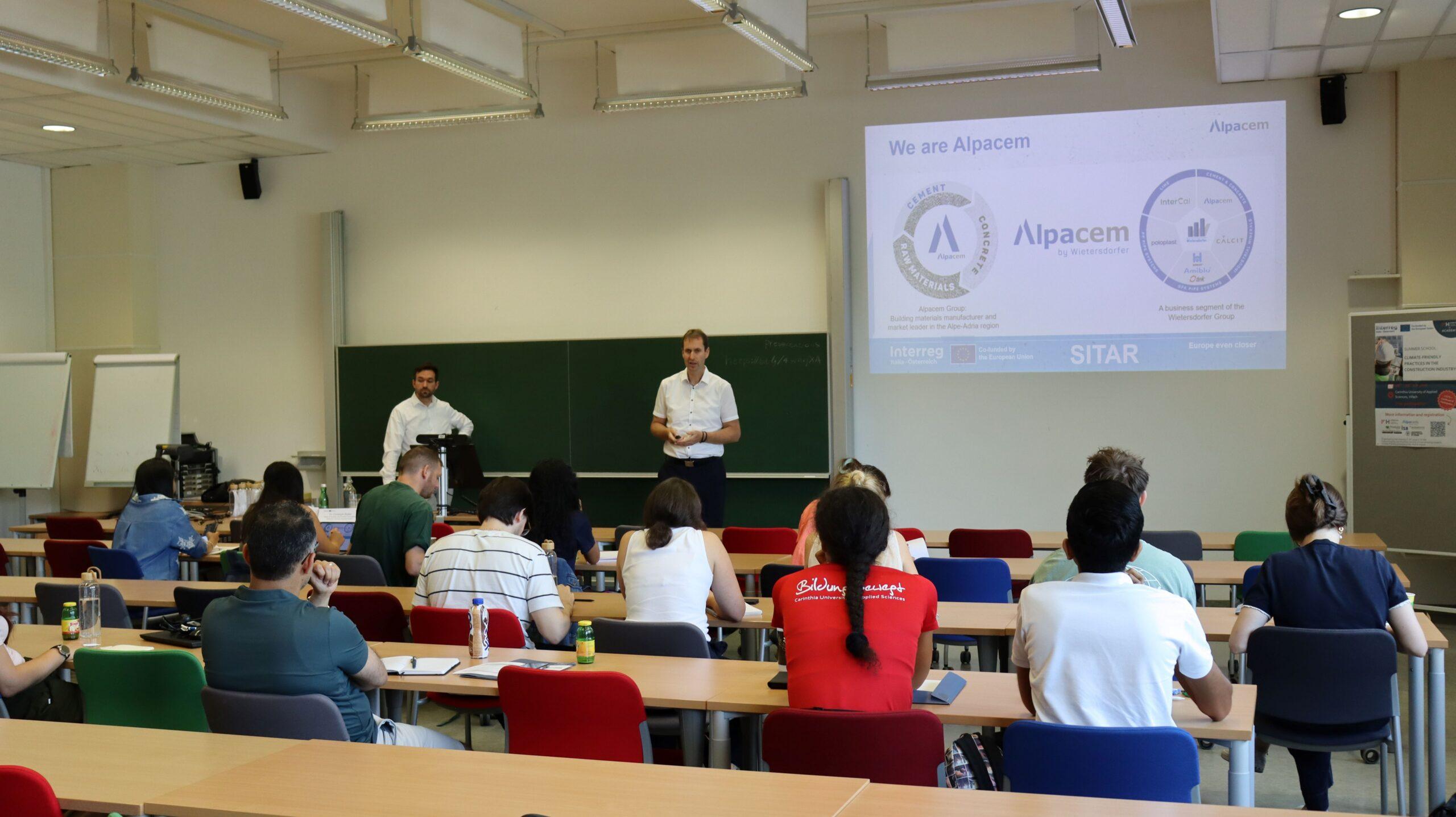
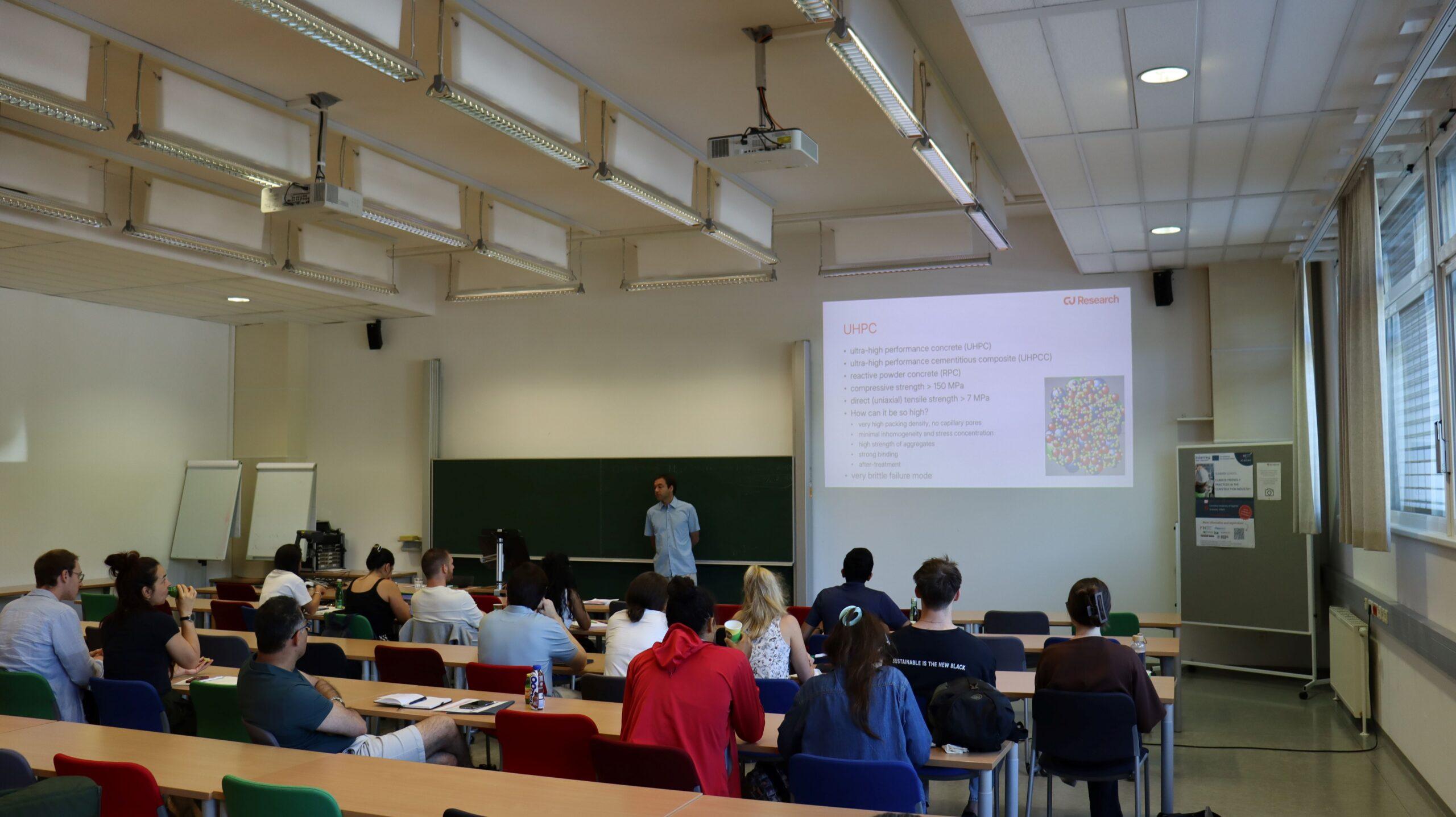
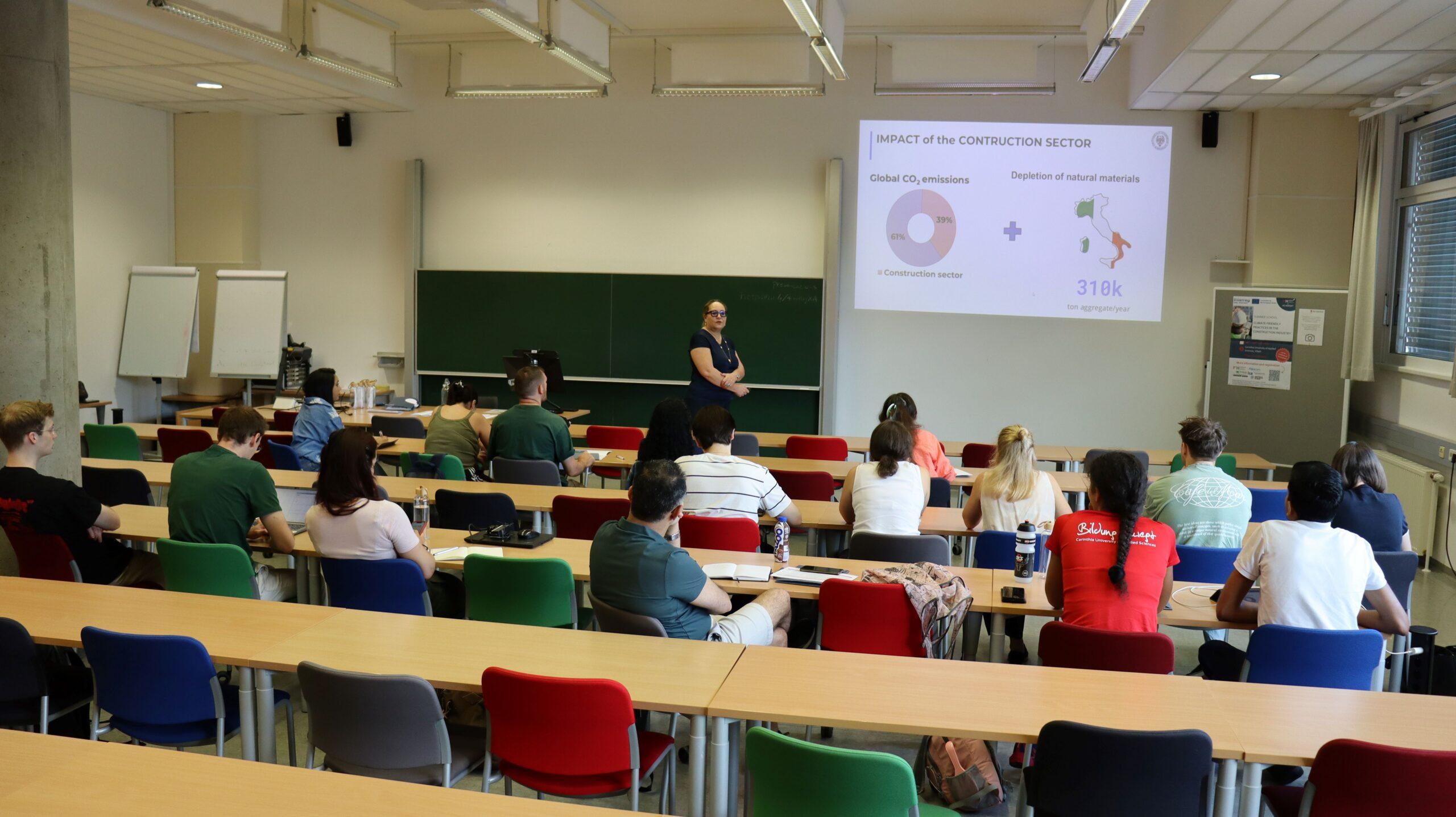
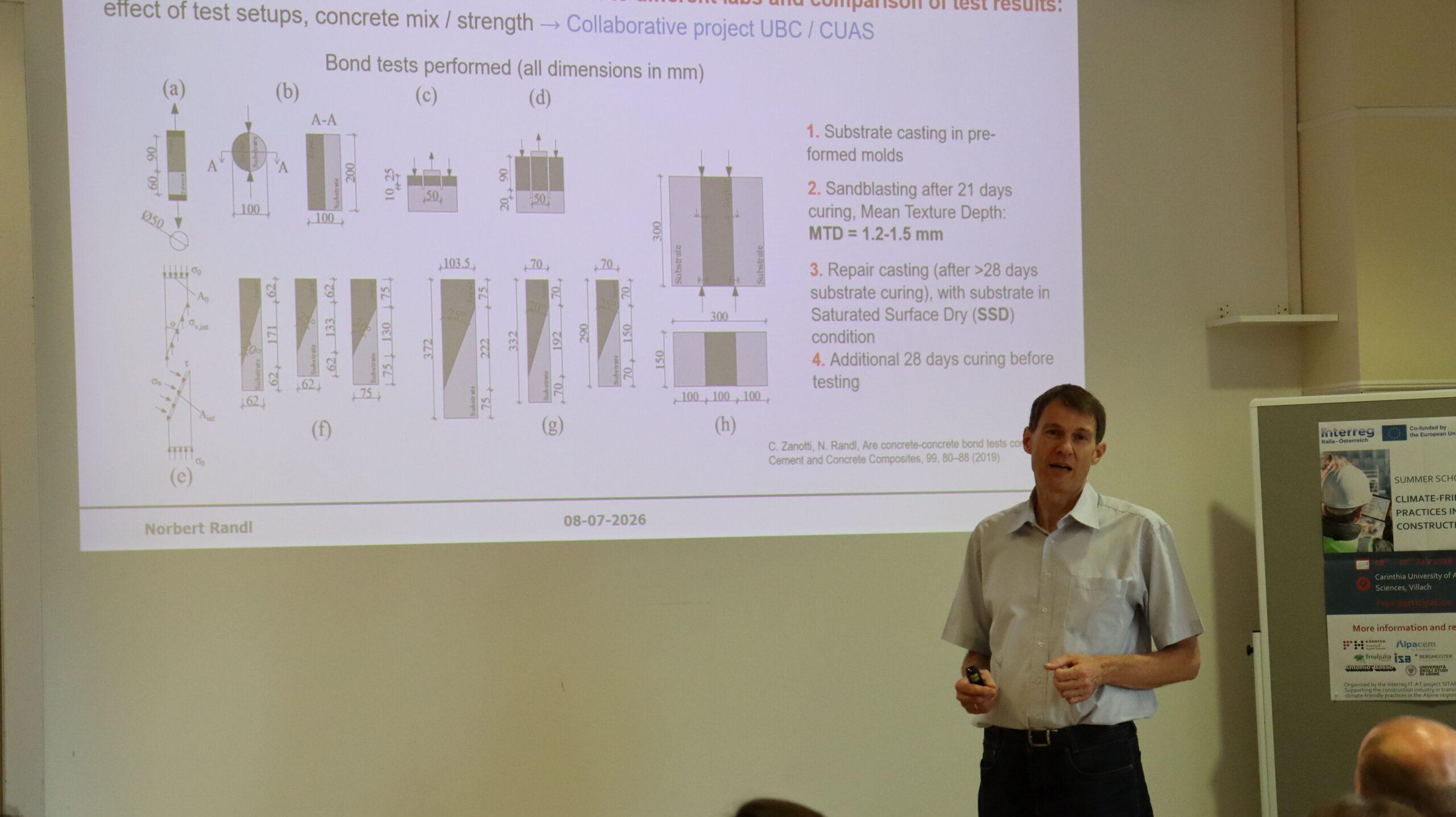
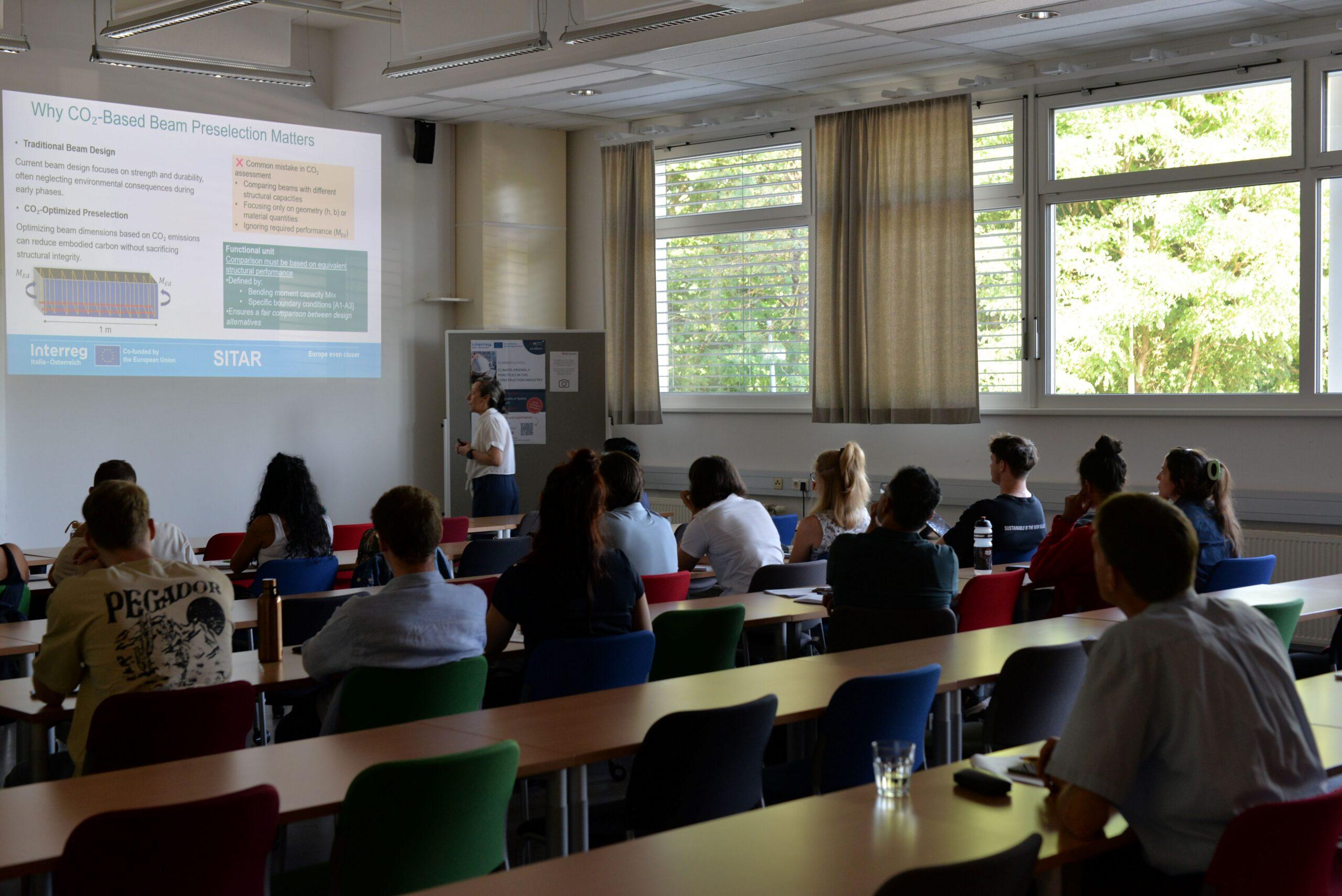
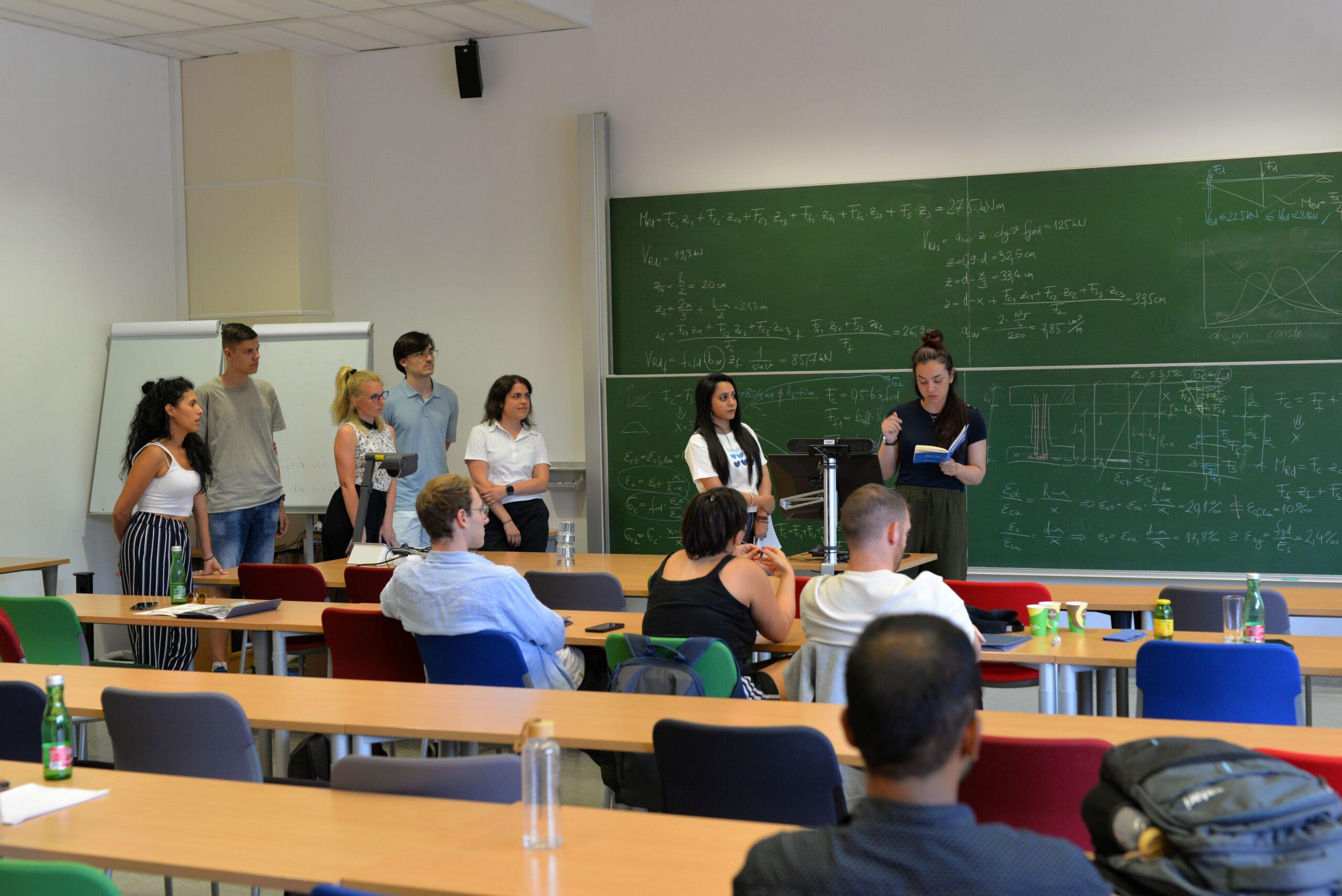
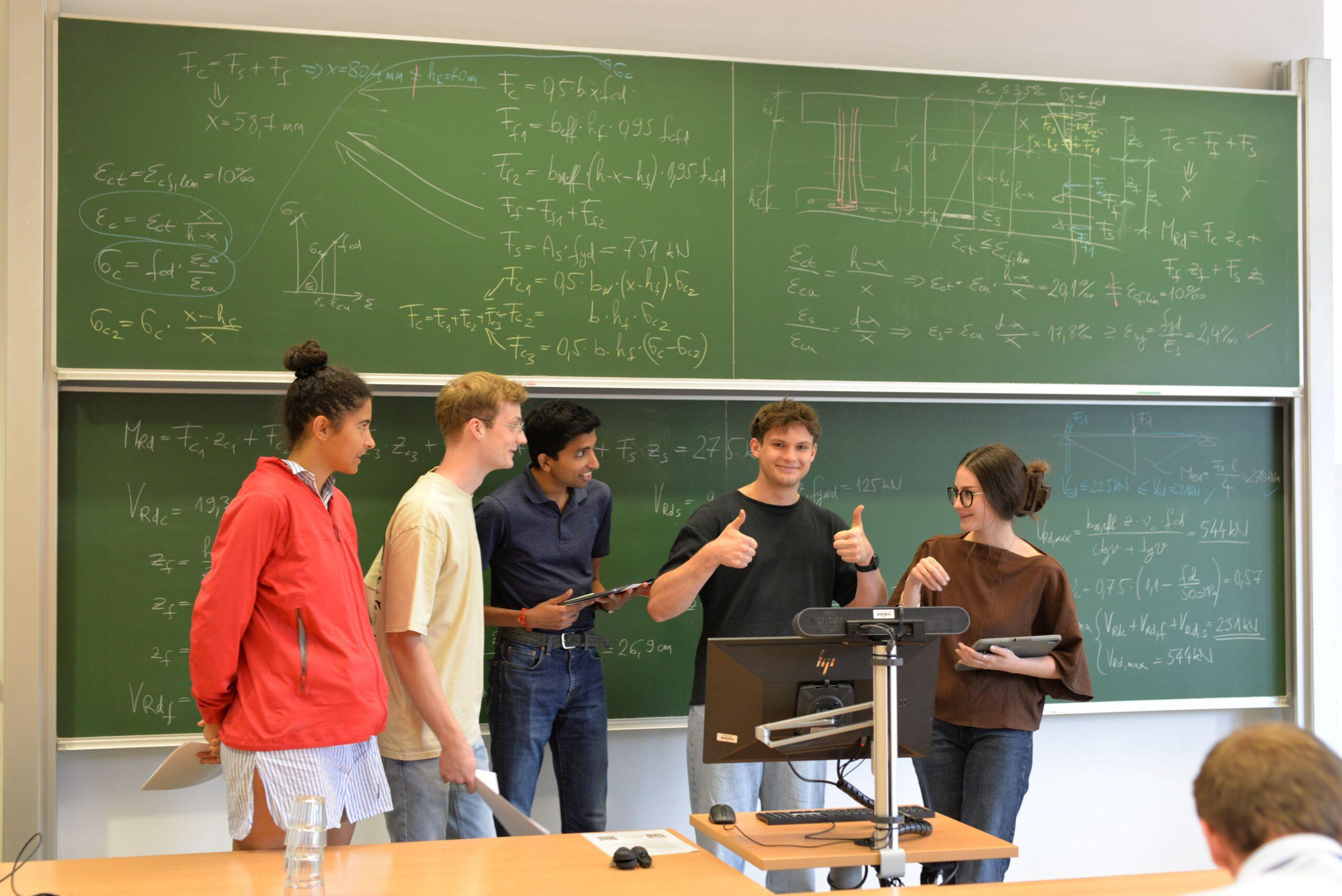
A series of presentations by the SITAR project partners provided participants with insights into both the latest research and practical applications. The topics covered a broad spectrum of climate-friendly practices, ranging from innovative and sustainable building materials to advanced approaches in the fields of structural engineering, assessment, and renovation. The program successfully bridged the gap between scientific research and practical implementation, demonstrating how sustainability can be integrated throughout the entire construction process.
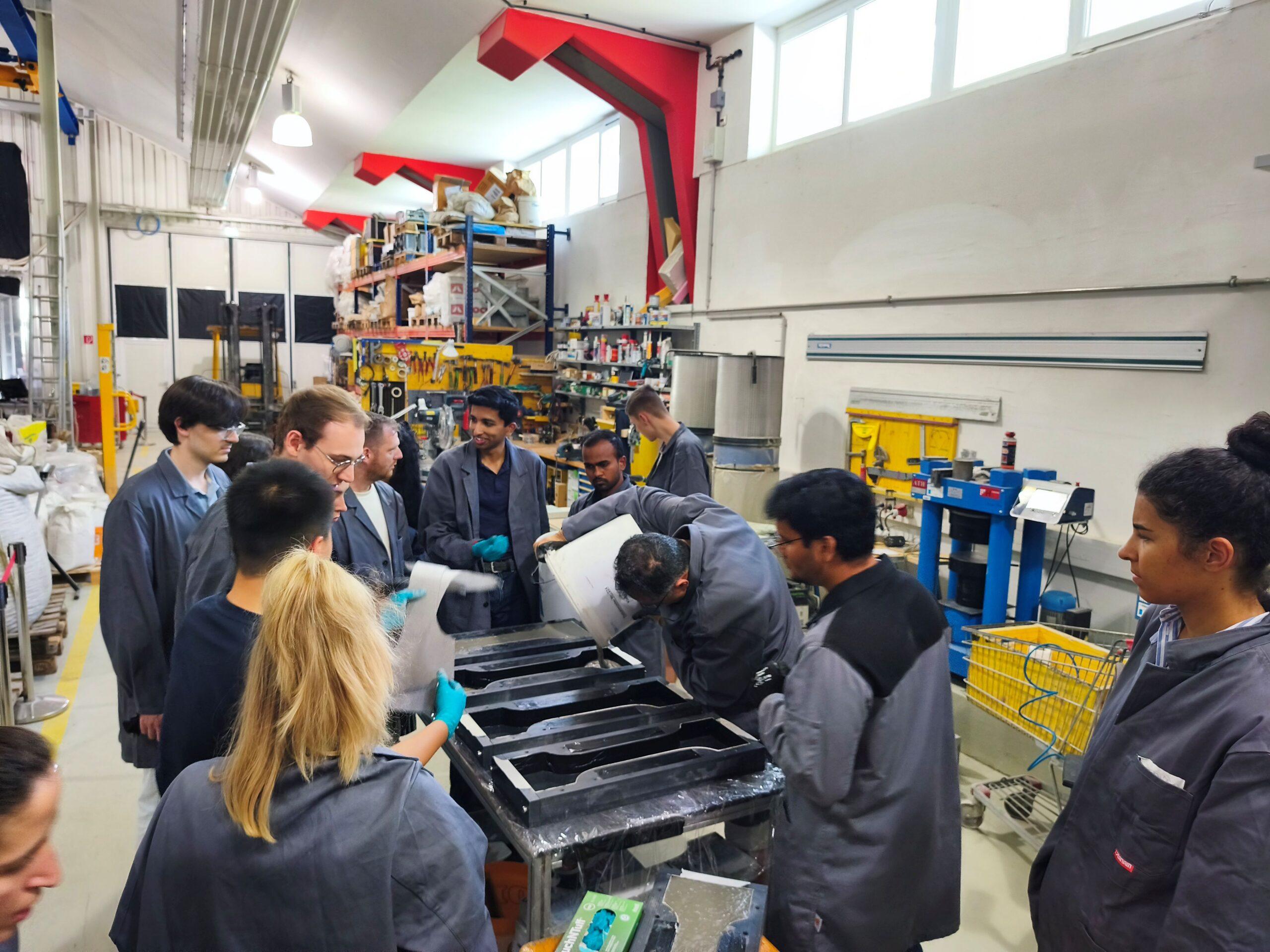
In addition to the presentations, participants had the opportunity to take part in lab exercises and interactive workshops. These hands-on experiences allowed them to explore the concepts presented in greater depth, gain practical insights, and discuss challenges and opportunities directly with experts in the field.
The SITAR Consortium would like to express its sincere gratitude to all speakers and contributors, whose expertise and dedication helped create an innovative and inspiring learning experience. Their contributions shed light on novel approaches to sustainability at various levels, ranging from material development and characterization to structural solutions for a more climate-resilient built environment.
Above all, we would like to thank all participants for their active involvement, their thoughtful questions, their critical reflections, and the lively discussions. Their enthusiasm and willingness to share perspectives greatly enriched the Summer School and created an atmosphere of collaboration, learning, and innovation.
We hope that the participants enjoyed the summer school as much as the organizers did. The exchange of knowledge, ideas, and experiences over these three days has shown how important international cooperation and ongoing professional development are for addressing the challenges of sustainability in the construction sector.
As part of the SITAR project’s commitment to knowledge dissemination, all presentations and the results of the summer school will be made freely available as project outputs by the end of the project.
© SITAR Project Consortium