“Facilitators enable meaningful learning when they create inclusive and accessible learning environments for diverse educational backgrounds and empower older people through co-designed, relevant, and flexible learning formats.”
Lifelong learning is particularly successful when institutions actively engage with people, build trust, and create supportive conditions. By working closely with established institutions and partners, proactively reaching people aged 55 and over, and creating age-inclusive structures in the workplace, organisations can promote their participation in lifelong learning and support them in actively shaping their personal and professional development.
Guidelines
- Design inclusive programmes for diverse educational backgrounds
- Create comfortable and accessible learning spaces
- Integrate micro-credentials into curricular frameworks
- Establish coordinated structures for lifelong learning
- Empower older people
- Ensure that older people are co-designers of educational programmes.
- Offer learning opportunities in a diversity of formats
- Make sure that learning opportunities are meaningful
Compact Overview of Guidelines for Facilitators
The following section provides a brief yet informative overview of the key guidelines from the perspective of Facilitators. For each guideline, the key message and a short description are summarised to illustrate how meaningful, inclusive, and empowering learning experiences can be designed for older people. This compact overview provides readers with a clear understanding of how inclusive and accessible learning environments, diverse learning formats, appropriate educational structures, and the active involvement of older people can contribute to promoting their full participation in lifelong learning.
Design inclusive programmes for diverse educational backgrounds
Facilitators should develop tailored strategies to engage people with less formal education and “hard to reach” people. This includes simplified content, relatable examples, and culturally sensitive approaches. In addition, interactive content, regular feedback, and personalised support help in addressing the diverse needs of participants.
Create comfortable and accessible learning spaces
Flexible, open spaces or nature-based settings can enhance comfort and participation. Facilitators should also ensure that timing and transport options are considered to avoid logistical barriers. Facilitation of courses by someone from the target group of the course (e.g., same age group) can make content more accessible for learners due to a shared frame of reference.
Integrate micro-credentials into curricular frameworks
Institutions should develop elective curricula that allow micro-credentials to be credited. This requires harmonisation across universities and flexible enrolment procedures to accommodate non-traditional learners.
Establish coordinated structures for lifelong learning
A coordination office or responsible entity should oversee programme/course development, stakeholder networking, and local implementation. This ensures sustainability and responsiveness to community needs. Success depends on dedicated personnel and strategic planning.
Empower older people
Lifelong learning is not only about acquiring knowledge and skills, it is about fostering confidence, autonomy, and self-efficacy. Empowerment enables learners to take ownership of their educational journey, make informed decisions, and actively shape their personal and professional development. By embedding empowerment into learning environments, institutions create inclusive spaces where older adults feel valued, capable, and motivated to continue growing. Empowerment needs adequate structures and frameworks.
Ensure that older people are co-designers of educational programmes
The important aspect of co-designing courses for older adults is ensuring that their voices, experiences, and needs directly shape the learning process. This makes courses more relevant, accessible, and empowering, while also fostering inclusion and dignity.
Offer learning opportunities in a diversity of formats
Rigid formats and overly structured modules can create barriers for older people. Flexibility is essential to accommodate diverse needs, preferences, and life circumstances. Learning programmes should allow for adaptable pacing, modular participation, and personalised pathways, enabling learners to engage without feeling constrained. By prioritising flexibility, institutions foster inclusion, reduce stress, and empower participants to integrate learning seamlessly into their everyday lives.
Make sure that learning opportunities are meaningful
Lifelong learning opportunities must resonate with older people by aligning with their personal goals and everyday realities. Programmes should be designed to support individual needs, offering content that is practical, relevant, and immediately applicable. Meaningful learning fosters engagement, confidence, and a sense of purpose, ensuring that participants view education not as an abstract exercise but as a valuable tool for enhancing their daily lives and future aspirations.

Key Takeaways
Address Diverse Educational Backgrounds
- Are courses tailored to different prior knowledge and learning experiences?
- Is content accessible for both beginners and advanced learners?
Create Supportive Environments
- Does the physical space feel safe and welcoming?
- Are emotional, psychological, and social aspects considered?
Embed Micro-Credentials in Broader Curricula
- Are micro-credentials integrated into comprehensive learning pathways?
- Do they connect to recognised frameworks for progression?
Ensure Structured Development and Local Coordination
- Is there a clear plan for programme development?
- Are local networks and resources leveraged for implementation?
Include Empowerment as a Core Element
- Do programmes foster confidence and autonomy?
- Are learners encouraged to take ownership of their learning journey?
Engage Older Learners as Co-Designers
- Are learners involved in shaping micro-credentials and programmes?
- Is their feedback actively integrated into design?
Offer Both Formal and Non-Formal Learning Formats
- Are flexible options available beyond traditional classroom settings?
- Do programmes include informal, community-based learning opportunities?
Ensure Learning Opportunities Are Meaningful
- Does the content align with learners’ everyday needs and goals?
- Is it practical, relevant, and personally valuable?
Download
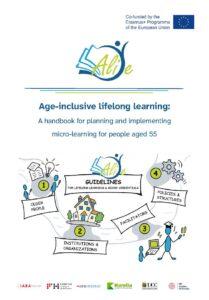
All guidelines presented on this website are also available in our downloadable handbook. Click the picture below to access it.