vvv
“Learning becomes meaningful for older people when it is open, relevant, community-oriented, easily accessible, and connected to their lived realities.”
Learning empowers older people when it promotes social connections, provides practical and relevant content, connects to their lived realities, and is easily accessible and clearly visible.
Guidelines
Compact Overview of Guidelines for Older People
The following section provides a brief yet informative overview of the key aspects of older people’s perspectives. For each guideline, the key message and a short description are summarised to highlight what older people consider particularly important for meaningful learning. This compact overview provides readers with a clear understanding of how open learning environments, practical and relevant learning content, consideration of potential labour market relevance, social networks and relationships, and the accessibility and visibility of information can contribute to age-inclusive lifelong learning.
Foster social and emotional learning environments
Older adults generally enjoy contributing their own knowledge and experiences. Programmes should include informal spaces (e.g., coffee breaks) and opportunities for learners to share personal stories. This enhances motivation, retention, and the perceived value of learning.
Prioritise practical and relevant content
Practical content such as digital literacy, caregiving, or boundary-setting resonate with older adults. Courses should prioritise practical skills that empower learners in their daily lives.
Consider potential labour market relevance in learning
While older adults are often motivated to engage in lifelong learning by curiosity, personal growth, and social connection, some of them are also motivated by staying in or returning to the labour market. For them, education has an economic dimension, helping them remain active in the labour market for longer or find new roles, such as in volunteer or community projects.
Consider social networks and peers in learning
Social networks and peer relationships are powerful drivers of effective lifelong learning. Encouraging interaction and experience-sharing among learners fosters a sense of belonging, enhances motivation, and deepens understanding. Peer support creates opportunities for collaborative problem-solving and mutual encouragement, which are particularly valuable for older adults navigating new learning environments. Integrating social elements into learning design transforms education into a community experience rather than an isolated task.
Make information accessible and visible for the target group of older people
Clear, accessible, and well-placed information is critical for reaching older people. Many individuals aged 55+ may not actively seek out opportunities, so institutions must make learning options highly visible through multiple channels, both online and offline. Accessibility goes beyond physical availability; it includes using plain language, intuitive formats, and familiar platforms. By prioritising accessibility and visibility, organizations remove barriers and empower older adults to participate confidently in lifelong learning.

Key Takeaways
Create Learning Environments that Foster Community and Emotional Connection
- Are spaces welcoming and supportive?
- Do they encourage interaction and a sense of belonging?
Ensure Content is Directly Applicable to Everyday Life
- Is the learning practical and relevant to participants’ daily routines?
- Does it address real-life challenges and interests?
Understand Learners’ Motivations
- Are programmes designed to satisfy curiosity, personal growth, and social engagement?
- Do they also consider motivations related to staying in or returning to the labour market?
Use Effective Learning Methods
- Are teaching strategies, pedagogical and didactical approaches adapted to the needs of older people?
- Do they include interactive, hands-on, and experience-based approaches?
Integrate Social Networks and Peer Interaction
- Are opportunities for sharing experiences and collaborative learning provided?
- Is peer support encouraged?
Make Information Visible and Accessible
- Is information easy to find and understand?
- Are multiple channels used (online, offline, community spaces)?
Download
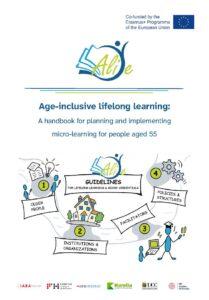
All guidelines presented on this website are also available in our downloadable handbook. Click the picture below to access it.