“Lifelong learning becomes inclusive when flexible and accessible learning opportunities, recognition, the reduction of technical barriers, and the overcoming of stereotypes are promoted.”
Policy frameworks and structural conditions play a crucial role in determining how accessible and inclusive lifelong learning can be for older people. Flexible and locally accessible learning opportunities, the consideration of technical barriers, opportunities for recognition, and the reduction of age-related stereotypes contribute to promoting the participation of people aged 55 and over in lifelong learning.
Guidelines
- Ensure programme flexibility
- Ensure local accessibility
- Offer recognition with or without formal certification
- Be aware of potential technological issues as barriers to lifelong learning
- Be aware of negative attitudes and stereotypes towards age-inclusive lifelong learning
- Clarify current legislation and financial aspects
Compact Overview of Guidelines for Policies and Structures
The following section provides a brief yet informative overview of the key guidelines for policies and structures. For each guideline, the key message and a short description are summarised to illustrate how flexibility, local accessibility, opportunities for recognition, the consideration of technical challenges, and the reduction of negative attitudes and stereotypes shape older people’s participation in lifelong learning. This compact overview provides readers with a clear understanding of the overarching conditions that can enable or hinder age-inclusive lifelong learning for people aged 55 and over.
Ensure programme flexibility
Educational courses should be designed with modular, step-by-step formats that allow learners to engage gradually. Structural barriers such as rigid curricula hinder participation.
Ensure local accessibility
Localised, low-threshold courses are essential to reach diverse older populations, especially in rural areas. Examples are community-based sessions or informal learning environments. Structural barriers such as centralised courses hinder participation.
Offer recognition with or without formal certification
Older adults often value personal growth and contribution over formal credentials. Offering certificates of attendance or informal recognition can enhance motivation without imposing bureaucratic hurdles. This is especially true if older people are retired and no longer need to focus on their employability. If the goal is to improve formal qualifications, then a certificate may be necessary.
Be aware of potential technological issues as barriers to lifelong learning
Accessing and effectively utilising lifelong learning programmes can present significant technological challenges, particularly when digital tools and platforms are integral to participation. These issues often stem from disparities in technical infrastructure, digital literacy, and system compatibility, which may hinder seamless engagement and limit the inclusivity of such initiatives.
Be aware of negative attitudes and stereotypes towards age-inclusive lifelong learning
Age-inclusive lifelong learning is essential for fostering equality, innovation, and social cohesion. Negative attitudes and stereotypes can create barriers that discourage older adults from participating in education and skill development. By recognising and addressing these biases, it is important to promote a culture where learning is valued at every stage of life. This approach benefits individuals, organisations, and society by focussing diverse experiences and perspectives.
Clarify current legislation and financial aspects
Cost-related concerns often prevent individuals from pursuing lifelong learning opportunities. Tuition fees, material costs, and lack of financial support can create significant obstacles, especially for older people or those with limited income. Addressing these barriers through scholarships, subsidies, and flexible payment options ensures that learning remains inclusive and equitable. Investing in accessible education benefits society by empowering people to continuously develop skills and contribute meaningfully throughout their lives.
Key Takeaways
Ensure Flexibility
- Are learning opportunities adaptable in terms of schedule and format?
- Are part-time, online, or hybrid options available?
Guarantee Local Accessibility
- Are courses offered close to where participants live?
- Are there partnerships with local institutions (e.g., community centres, libraries)?
Rethink Certification
- Is formal certification truly necessary?
- Are informal learning opportunities also considered?
Address Technological Barriers
- Is support provided for using digital tools?
- Are platforms simple and user-friendly?
Avoid Negative Stereotypes
- Are age-related biases and discrimination actively addressed?
- Is communication inclusive and respectful?
Reduce Financial Obstacles
- Are affordable or free options available?
- Are scholarships, subsidies, or instalment plans offered?
Download
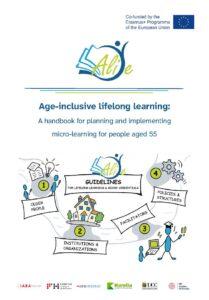
All guidelines presented on this website are also available in our downloadable handbook. Click the picture below to access it.